2026-03-08
Industrial filtration is a foundational process in manufacturing, energy, environmental management, and air quality control. Every bag filter in a cement plant, every dust collector in a woodworking facility, every liquid filtration system in a chemical process, and every HVAC air handler in a commercial building relies on a filter medium — a material whose controlled pore structure captures particulates while allowing the carrier fluid (air, gas, or liquid) to pass through at acceptable flow resistance.
Needle-punched nonwoven fabric is one of the most widely used industrial filter media globally, and in many filtration applications, it is the dominant or sole material of choice. For engineers specifying filter media, purchasing managers sourcing replacement filter bags or filter fabric rolls, and equipment manufacturers designing filtration systems, understanding what needle-punched nonwoven filter media is, how it performs relative to alternative materials, and what specification parameters determine its suitability for a given application is the foundation of an effective filter media selection.
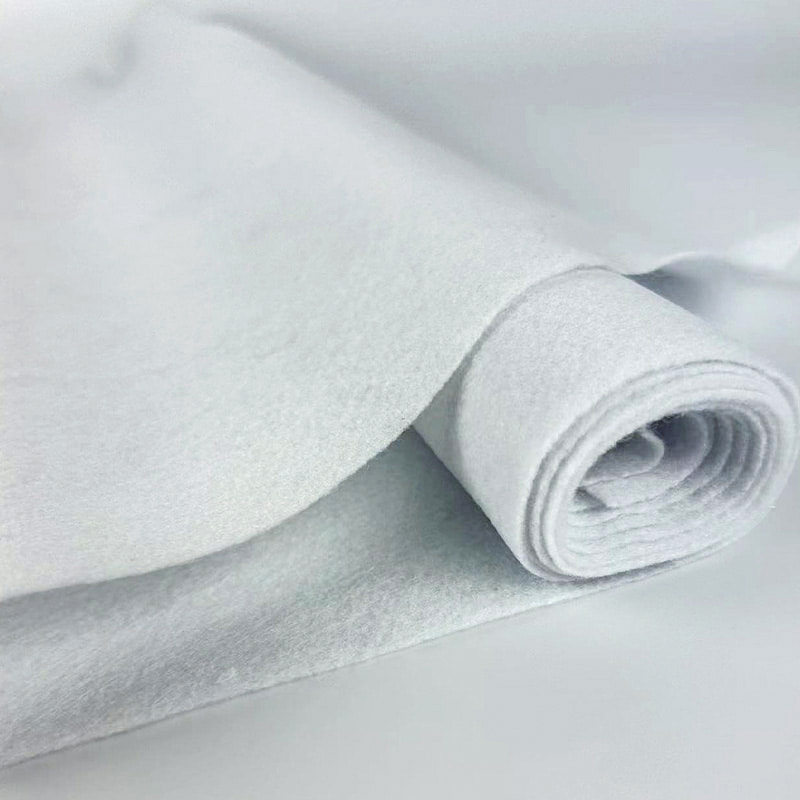
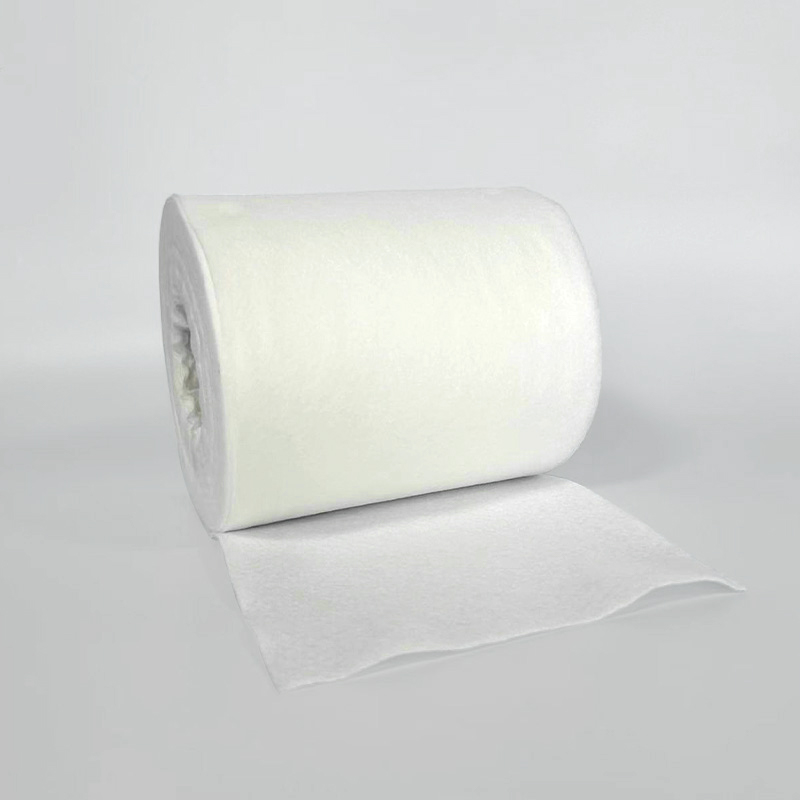
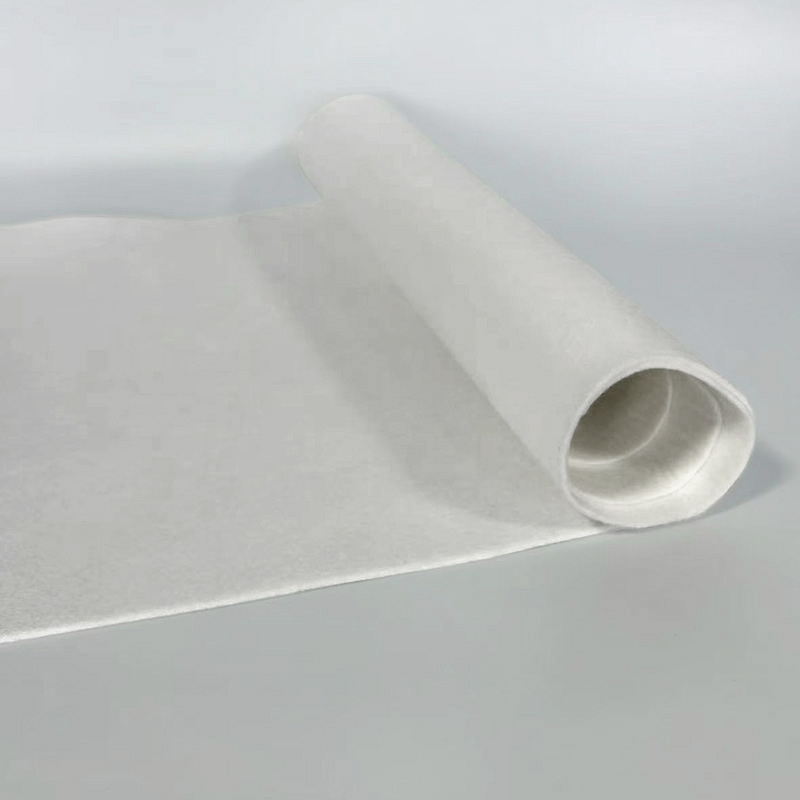
Needle-punched nonwoven filter media is a three-dimensional fibrous structure created by mechanically entangling a web of staple fibers through repeated needle-board penetration. Unlike woven filter fabrics — which have a regular grid of square or rectangular openings defined by the weave structure — needle-punched nonwovens have a tortuous, three-dimensional pore structure formed by the random arrangement of entangled fibers. This structural difference has fundamental implications for filtration performance.
In a woven filter fabric, particles smaller than the opening size pass through freely; particles larger than the opening are captured on the surface. The filtration mechanism is primarily surface sieving, and the filter's performance is largely determined by the size of its weave openings. In a needle-punched nonwoven, the tortuous three-dimensional pore network creates multiple capture mechanisms working simultaneously:
Interception occurs when a particle following a streamline through the fiber matrix comes close enough to a fiber surface to contact and adhere to it. Because the fiber matrix creates many flow path changes, particles have many opportunities for fiber contact even if their inertia does not carry them off the main streamline.
Impaction occurs when a particle's inertia carries it off the curved streamline around a fiber and into contact with the fiber surface. This mechanism is most effective for larger, denser particles at higher flow velocities.
Diffusion occurs for very small particles (below approximately 1 micron) whose random Brownian motion causes them to deviate from streamlines and contact fiber surfaces more frequently than their size would predict from impaction alone. The tortuous path through a thick needle-punched media provides more opportunity for diffusion capture than a thin woven fabric.
The combination of these mechanisms — operating simultaneously throughout the full thickness of the needle-punched media rather than just at the surface — gives needle-punched nonwoven filter media its characteristic depth filtration capability: the ability to capture a range of particle sizes throughout the filter thickness rather than just at the surface, which delays surface clogging and extends filter service life between cleaning cycles.
The largest application segment for needle-punched nonwoven filter media is bag filters (filter bags) used in pulse-jet, shaker, and reverse-air dust collection systems across heavy industry. Cement and lime production, steel and metal processing, power generation (coal ash handling), woodworking and furniture manufacturing, food processing (flour, sugar, starch), chemical manufacturing, and pharmaceutical production all generate process dust streams that must be filtered before exhaust to the atmosphere or recirculation within the facility.
Filter bags for pulse-jet dust collectors are typically cylindrical bags of needle-punched nonwoven fabric, supported by internal wire cages, through which dusty air flows from outside to inside. Particulate is captured on the outer surface and within the fabric depth; collected dust is periodically dislodged by a reverse pulse of compressed air, falling to the hopper below. The filter bag fabric must withstand thousands of pulse cleaning cycles without fabric fatigue or fiber shedding, while maintaining filtration efficiency throughout its service life (typically 1–3 years in normal industrial service).
Needle-punched nonwoven filter media is used extensively in liquid filtration applications — filter bags and filter cartridges for process water filtration, industrial coolant filtration in metalworking, paint and coating filtration, chemical process liquid clarification, food and beverage production, and wastewater treatment. In liquid filtration, the filter media must maintain its structural integrity when wet (wet tensile strength), resist the chemical environment of the liquid being filtered, and provide a consistent pore structure to deliver the rated filtration efficiency.
Filter bag constructions for liquid filtration are typically made from felted needle-punched fabric that has been thermally or chemically surface-treated to provide a smooth, dense filtration surface that minimizes fiber migration into the filtrate and provides efficient particulate capture. The felt construction — denser and more uniform in pore size than a standard needle-punched fabric — is the standard for applications where particulate retention efficiency at a defined micron rating is specified.
For commercial HVAC systems and industrial air handling, needle-punched nonwovens serve as filter media in panel filters, bag filters, and pleated filter elements. In HVAC applications, the filter must balance filtration efficiency (capturing a defined proportion of particles at defined sizes — rated by MERV, EN779/ISO 16890 efficiency classes) against pressure drop (resistance to airflow, which determines energy consumption of the air handling system). Higher efficiency filtration requires finer fiber structures and higher media density, which increases pressure drop. Needle-punched nonwoven media for HVAC applications is engineered to provide target efficiency at minimum pressure drop by optimizing fiber fineness (denier), media weight, and construction.
In civil engineering and construction, needle-punched nonwoven geotextiles serve as filtration layers in drainage systems, retaining walls, embankments, and shoreline protection works. The geotextile filter fabric allows water to pass through while retaining the fine soil particles that would otherwise migrate into and clog the drainage medium. Needle-punched nonwoven geotextile filter fabrics are specified by their apparent opening size (AOS or O90 — the pore size that retains 90% of particles in a standardized slurry test) and their water permeability.
| Property | Needle-Punched Nonwoven | Woven Filter Fabric | Meltblown Nonwoven | Fiberglass Filter Media |
|---|---|---|---|---|
| Filtration mechanism | Depth filtration — interception, impaction, diffusion throughout media thickness | Surface sieving — particles captured at fabric surface openings | Depth filtration — very fine sub-micron fiber matrix; primarily diffusion and interception | Depth filtration — fine glass fiber matrix; effective for sub-micron particles |
| Filtration efficiency range | Good — captures particles from 1–100 microns effectively; efficiency is improvable with surface treatment or membrane lamination | Moderate — defined by weave opening size; limited sub-micron capability without treatment | Excellent — capable of HEPA-class (≥99.97% at 0.3 micron) filtration; used in masks, HEPA filters | Excellent — sub-micron efficient; used in HEPA and ULPA filter applications |
| Dust holding capacity/service life | High — three-dimensional depth structure holds large amounts of dust before excessive pressure drop; long service intervals | Lower — surface loading fills quickly; more frequent cleaning or replacement needed | Lower — fine fiber structure clogs relatively quickly under high dust loads; better suited for clean air applications | Moderate — higher flow resistance per unit weight than nonwoven; used in single-pass applications |
| Pulse-jet cleanability | Excellent — recovers close to original pressure drop after each pulse cleaning cycle; suitable for continuous-duty dust collectors | Good — surface dust cake dislodges cleanly in shaker and reverse-air systems; not ideal for pulse-jet | Poor — fine fiber structure damaged by repeated high-pressure pulse cleaning; not suitable for pulse-jet dust collectors | Poor — fragile under mechanical cleaning cycles; used in rigid or disposable filter configurations |
| Chemical resistance options | Wide range — polyester, polypropylene, PTFE, PPS (Ryton), aramid (Nomex), P84 fiber options for different chemical and temperature environments | Similar fiber options; limited to specific weave constructions per fiber type | Limited — primarily polypropylene and polyester; not all chemical environments are suitable | Limited by glass fiber chemistry; excellent acid resistance, but alkaline environments can degrade glass |
| Temperature resistance | Depends on fiber: polyester to ~150°C continuous; PPS to ~190°C; P84 to ~240°C; PTFE to ~260°C; fiberglass to 260°C+ | Same fiber-dependent range as nonwoven | Typically limited to 100–130°C for standard grades | High — glass fiber rated to 260°C+; suitable for high-temperature industrial exhaust streams |
| Cost | Low to medium — cost-effective at scale; wide availability | Medium — woven construction adds cost; limited availability for custom specifications | Medium to high — fine fiber production process is more expensive; specialized applications | High — glass fiber raw material and processing cost; premium for high-temperature and HEPA-class applications |
| Primary applications | Industrial dust collection bags, liquid filter bags, geotextile filtration, HVAC panel/bag filters, coolant filtration | High-pressure filtration, cake filtration in press filters, and slurry dewatering | HVAC HEPA and fine filtration, respirator masks, and medical filtration | HEPA/ULPA air filters, high-temperature gas filtration, nuclear-grade filtration |
The fiber composition of the needle-punched nonwoven is the most critical specification variable for chemical and temperature resistance in industrial filtration. The correct fiber selection must be confirmed for the specific gas stream chemistry, temperature, and particulate type in the application:
Polyester (PET) is the most widely used fiber for standard industrial dust collection applications. Polyester is resistant to most mineral acids at moderate concentrations and temperatures, has good hydrolysis resistance at moderate temperatures, and provides continuous service to approximately 130–150°C. It is not suitable for concentrated acid or alkali environments or for continuous temperatures above 150°C.
Polypropylene (PP) provides excellent resistance to most acids and alkalis but has lower temperature resistance than polyester, typically limited to 90–100°C continuous. Widely used in liquid filtration applications (acid, alkali, and solvent resistance) and in lower-temperature industrial gas filtration, where strong chemical resistance is the priority.
PPS (Polyphenylene Sulfide, Ryton®) is resistant to most chemical environments at elevated temperatures and provides continuous service to approximately 190°C. It is the standard specification for coal-fired power plant fly ash filtration where gas temperatures are elevated, and the gas stream may contain acidic condensates. More expensive than polyester or polypropylene but the correct choice for hot, chemically aggressive gas streams.
P84 (Polyimide) provides continuous service to approximately 240°C and has excellent resistance to acid environments. Used in high-temperature applications such as cement kiln filtration, where temperatures approach or exceed the capability of PPS.
PTFE (Polytetrafluoroethylene) is the most chemically inert filter fiber, resistant to virtually all acids, alkalis, and solvents, and rated to approximately 260°C continuous. PTFE fiber is used in the most aggressive chemical environments where other fibers fail. PTFE membrane laminated over a needle-punched substrate (to provide structural strength) is the standard solution for very fine particulate filtration (sub-micron emissions compliance) in demanding industrial applications.
Aramid / Nomex® provides excellent mechanical strength and good temperature resistance to approximately 200°C, with good resistance to most organic chemicals. Used where mechanical durability and pulse-cleaning fatigue resistance are as important as temperature performance — large filter bags in high-velocity industrial systems benefit from the fiber's superior tensile strength.
Areal weight (g/m²) — higher weight provides more depth for particulate holding and generally higher efficiency, but increases pressure drop. Typical industrial filter bag media: 400–700 g/m².
Thickness (mm) — determines available depth for dust penetration and holding capacity. Related to areal weight but also influenced by fiber crimp and needle-punch density.
Air permeability (L/m²/s or CFM/ft²) at standard pressure — the flow resistance of the clean media. Higher permeability means lower pressure drop across the clean filter, which is important for energy efficiency but must be balanced against filtration efficiency.
Filtration efficiency (%) at defined particle size — what percentage of particles of a defined size the media retains under standardized test conditions. For industrial dust collectors, EN ISO 11057 (filter media test for pulse-jet applications) or equivalent testing is the reference.
Fiber type and operating temperature range — must match the gas stream or liquid chemistry and temperature of the application.
Surface treatment — singeing (heat-treating the surface to melt and smooth surface fiber ends, reducing surface drag and improving dust release), calendering (pressing the surface flat for improved surface filtration), PTFE membrane lamination (for the highest efficiency and dust release performance), or antistatic treatment (for combustible dust applications).
In industrial filtration terminology, "felt" filter fabric and "needle-punched nonwoven" refer to essentially the same type of material — both are produced by mechanically entangling staple fibers through needle punching. The term "felt" has historically been used for thicker, denser needle-punched materials used in heavy industrial applications (particularly filter bags and press filters), while "nonwoven" has been the broader term covering the full range of needle-punched products from lightweight to heavy. In modern usage, the two terms are largely interchangeable for industrial filter media, and the specific performance specification (areal weight, fiber type, permeability, surface treatment) is more informative than the product name.
Service life depends on the application's dust load, gas temperature and chemistry, pulse-cleaning frequency and pressure, and the fiber and construction specification of the filter bag. In normal industrial dust collection applications with correctly specified fiber and areal weight, pulse-jet filter bags typically provide 1–3 years of continuous service before replacement is required. Signs that replacement is needed include: increasing pressure drop across the filter that does not recover to near-clean levels after a pulse cleaning cycle (indicating media blinding — particulate penetration into and blockage of the media depth); visible holes or tears in the filter bag (which can be detected by particulate emissions at the clean air outlet); or filter bag collapse due to structural fatigue from repeated pulse cleaning cycles. Following a preventive replacement schedule based on the filter manufacturer's service life recommendation, rather than running to catastrophic failure, minimizes unplanned downtime and avoids particulate breakthrough.
Needle-punched nonwoven filter bags for liquid filtration can sometimes be cleaned and reused, depending on the application and the nature of the filtered particulate. For relatively dry, non-adhesive particulate in relatively clean liquids, flushing the filter bag with clean liquid, inverting and shaking, or using a low-pressure rinse can remove captured particulate and restore usable flow capacity. However, complete restoration of original filtration efficiency and flow resistance to new-bag specification is rarely achievable through cleaning — some retained particulate and fiber blinding will remain. For critical filtration applications where consistently rated efficiency must be maintained, or for applications involving adhesive, oil-coated, or chemically reactive particulate that resists cleaning, single-use replacement is the standard practice. Cleaning and reuse suitability should be verified for each specific application before adopting it as a maintenance practice.
Changshu Mingyun Hongshun Nonwoven Products Co., Ltd., Changshu, Jiangsu, manufactures needle-punched nonwoven filter media for industrial dust collection, liquid filtration, and air filtration applications. Available fiber types include polyester, polypropylene, PPS, P84, and PTFE. Areal weights from 200 g/m² to 1,000 g/m². Surface treatment options include singeing, calendering, and PTFE membrane lamination. Filter bag fabric rolls and finished filter bags for pulse-jet, shaker, and reverse-air dust collector systems are available. Custom specifications to customer requirements. OEM/ODM production for filter manufacturers and system integrators.
Contact us with your application's gas or liquid stream details, operating temperature, dust type and concentration, and required filtration efficiency to receive a filter media recommendation and pricing.
Related Products: Nonwoven Filter Material | Nonwoven Fabric for Automobile Interior | Felt | Functional Needle-Punched Nonwoven Fabric | Medical Nonwoven Fabrics

Enterprise tenet: service-based, quality for survival, science and technology for development
 +86-15151778356
 No. 121 Huangnilou, Yangqiao Village, Zhitang Town, Changshu City, Jiangsu Province, China
Copyright © Changshu Mingyun Hongshun Non woven Products Co., Ltd. All Rights Reserved. Custom OEM/ODM Environmental Nonwoven Fabrics Products Manufacturers


 English
 中文简体
中文简体 русский