2026-03-01
Walk through a modern vehicle's interior, and you are surrounded by nonwoven fabric — under the carpet, behind the door panels, lining the trunk, backing the headliner, covering the parcel shelf, cushioning the seats, and insulating the firewall. Nonwoven fabrics account for a significant portion of every passenger vehicle's interior material content by area, yet they are largely invisible to the end user because they are either hidden beneath visible trim layers or used as backing and substrate materials that perform structural and acoustic functions without being seen.
For automotive purchasing managers, Tier 1 and Tier 2 component suppliers, interior trim manufacturers, and materials engineers, understanding what automotive nonwoven fabric is, how it is manufactured, what performance requirements it must meet, and how to specify the right material for each interior application is essential knowledge for sourcing and qualification decisions. This guide covers all of these dimensions for needle-punched nonwoven fabrics — the dominant nonwoven technology used in automotive interior applications.
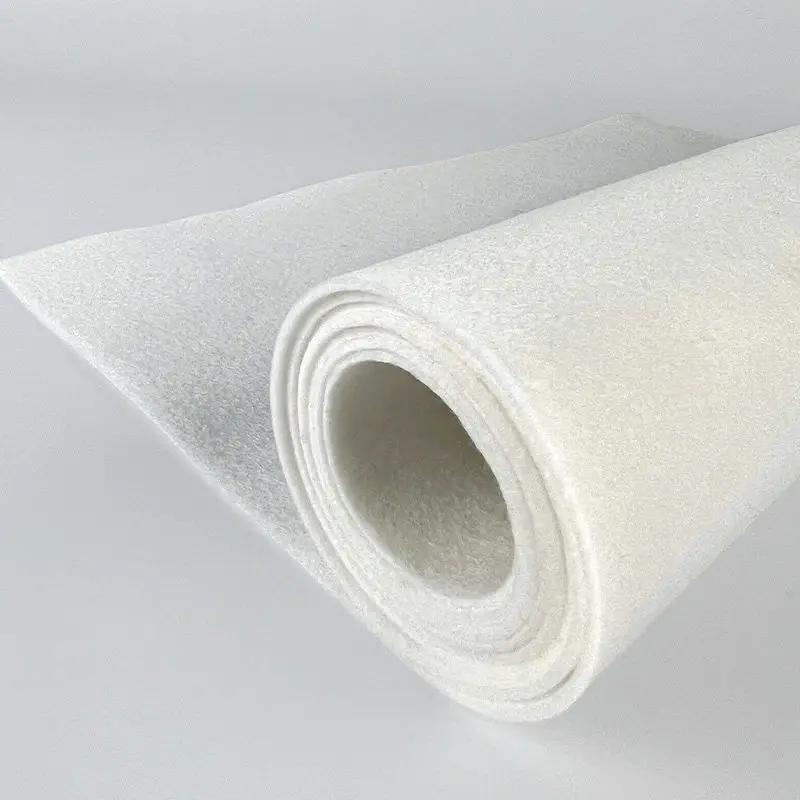
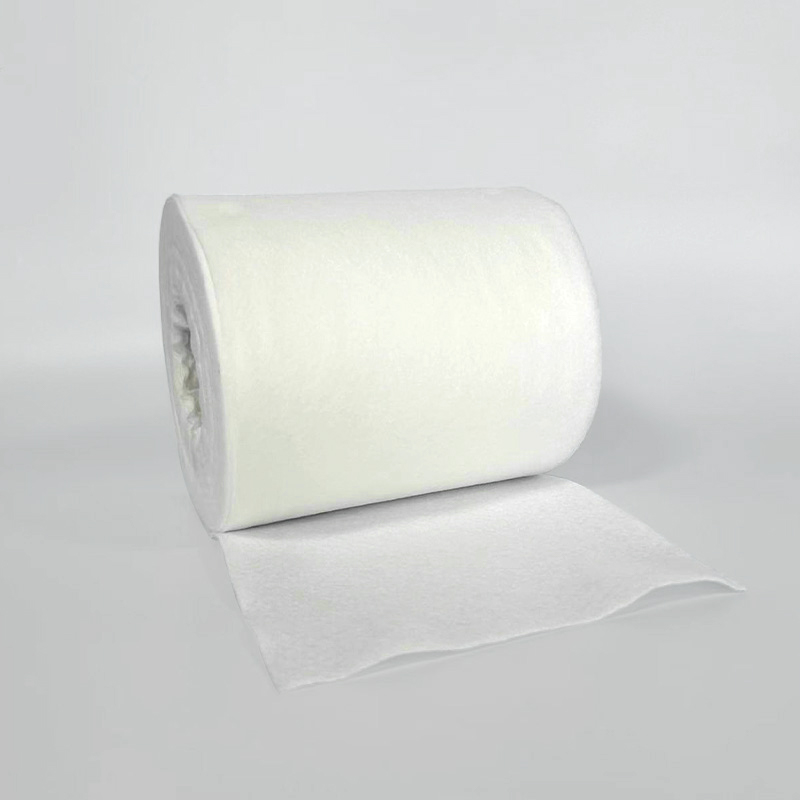
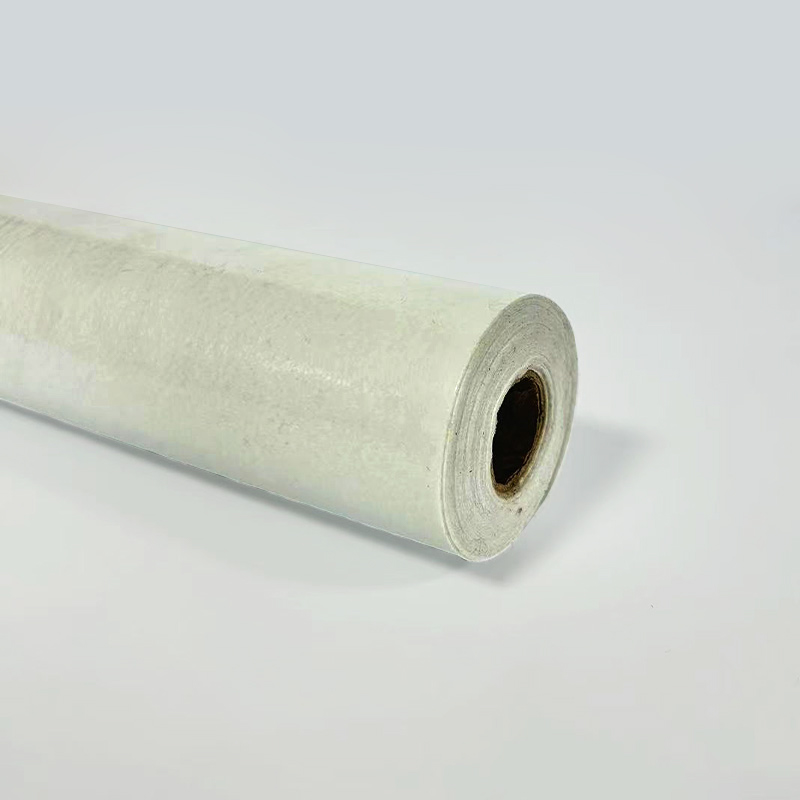
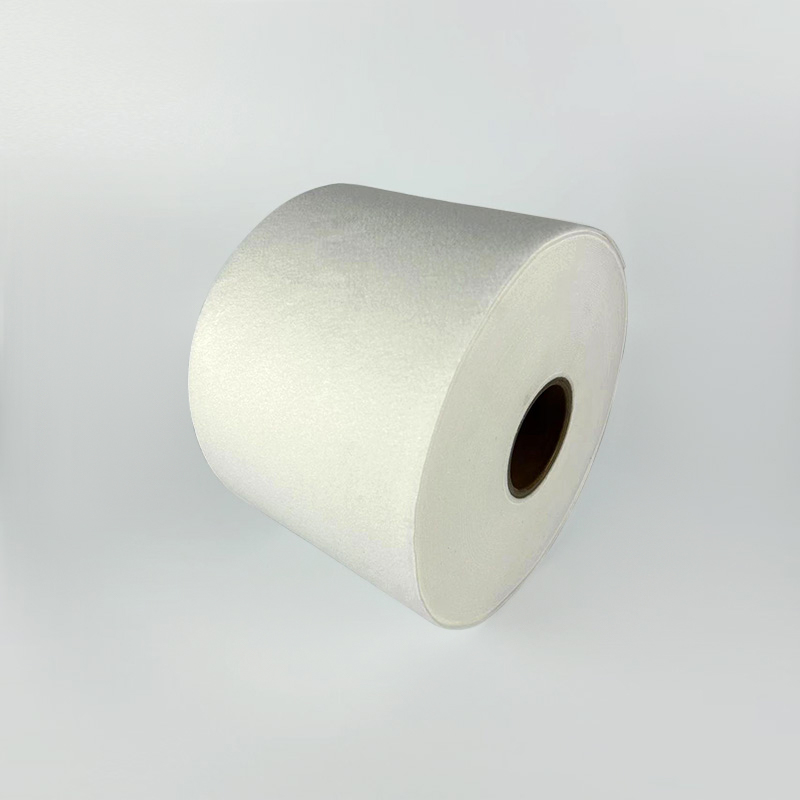
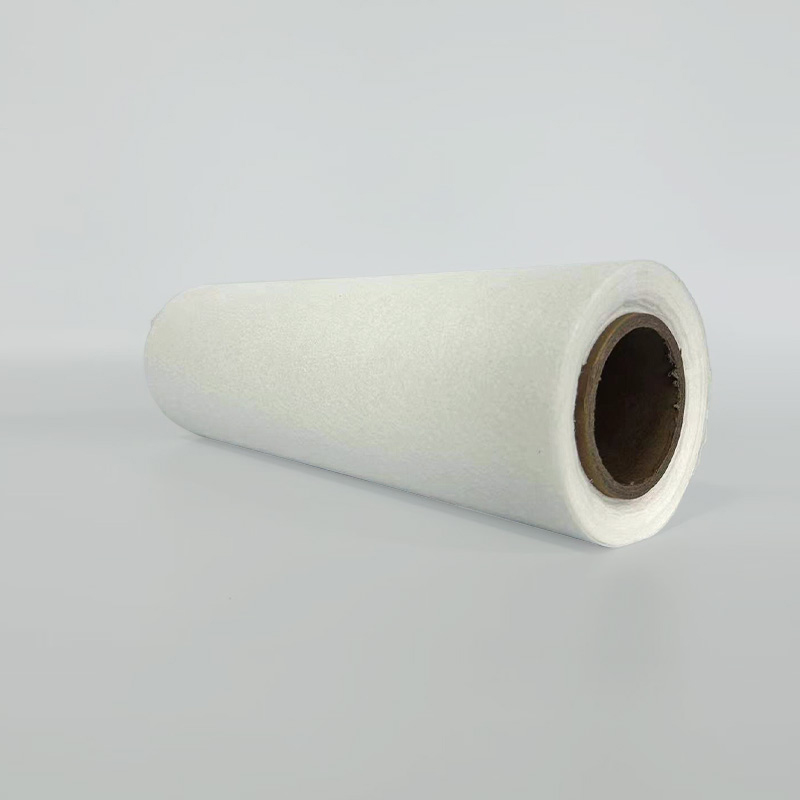
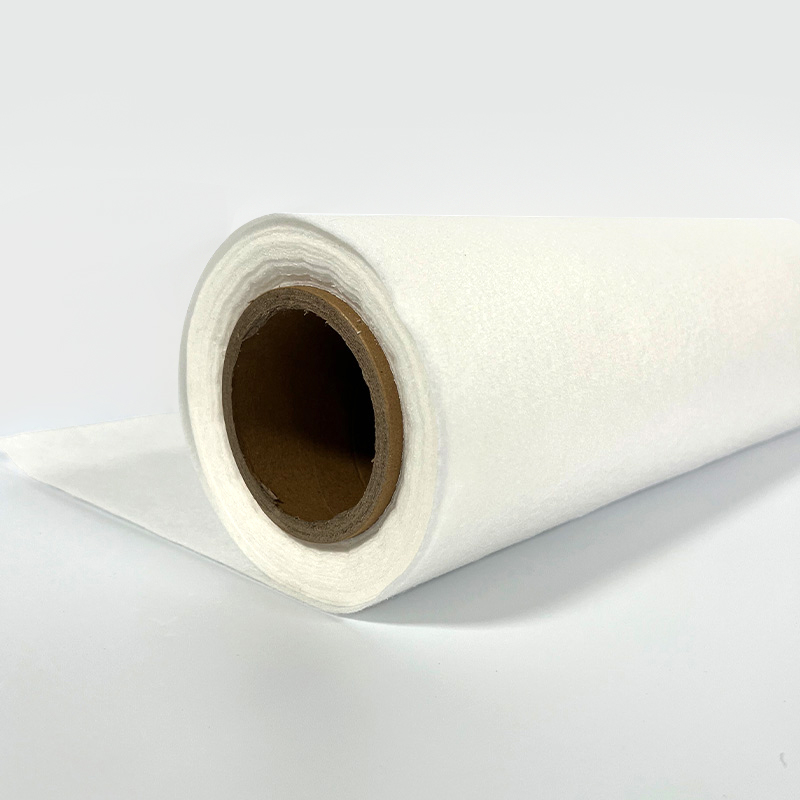
Needle-punched nonwoven fabric is produced through a mechanical process in which a web of loose fibers — polyester, polypropylene, nylon, recycled fiber blends, or natural fibers, depending on the application — is fed into a needle-punching machine equipped with a board of barbed needles. The needles repeatedly penetrate the fiber web, their barbs catching and entangling fibers as they pass through, mechanically interlocking the fibers with each other to create a cohesive fabric structure without weaving, knitting, or adhesive bonding.
The key production parameters — fiber type and denier, web weight, needle density, needle penetration depth and pattern, number of passes — determine the finished fabric's density, thickness, tensile strength, surface texture, and functional properties. Unlike woven fabrics whose properties are largely fixed by their yarn count and weave structure, needle-punched nonwovens can be engineered across a very wide range of performance specifications by varying these process parameters, making them highly adaptable to the diverse performance requirements of different automotive interior applications.
The automotive industry's adoption of needle-punched nonwoven fabrics as a core interior material is driven by a combination of functional performance advantages, manufacturing efficiency, and cost factors that together make nonwovens the preferred material across many interior applications where alternative materials — woven fabrics, foam, natural fiber mats — are less suitable.
Sound absorption and noise, vibration, and harshness (NVH) control. Automotive interior NVH — the level of road noise, engine noise, wind noise, and vibration experienced inside the cabin — is a key quality perception metric for vehicle buyers. Needle-punched nonwoven fabrics, particularly multi-layer or high-density constructions, are effective acoustic absorbers because their three-dimensional fiber structure dissipates sound energy through friction between the sound wave and the fiber surfaces. Nonwoven acoustic liners are used under carpets, in door cavities, behind dashboard panels, and in the engine compartment firewall precisely because they provide broadband sound absorption at relatively low areal weight — a combination that is difficult to achieve with alternative materials at equivalent cost.
Thermal insulation. Vehicle interiors require thermal management — keeping heat from the engine, exhaust system, and solar radiation from making the cabin uncomfortably hot, and retaining cabin warmth in cold climates. Needle-punched nonwovens, with their trapped air within the fiber matrix, provide effective thermal insulation for firewall liners, underbody panels, and floor systems. For electric vehicles, thermal management of the battery system is an additional application for nonwoven insulation materials.
Formability and thermoforming capability. Automotive interior components — carpet assemblies, trunk liners, door panel substrates, headliners — are not flat; they must conform to complex three-dimensional shapes. Needle-punched nonwovens based on thermoplastic fibers (particularly polyester and polypropylene) can be thermoformed — heated and pressed into complex shapes that they retain permanently after cooling. This thermoformability allows nonwoven fabric to be directly shaped into contoured interior components, eliminating the need for additional form-giving substrates in many applications.
Consistent, uniform material properties. The needle-punching process, when properly controlled, produces fabrics with highly uniform weight, thickness, and mechanical properties across the full width and length of production rolls. This consistency is critical in automotive applications where components are stamped, molded, or laminated in high-volume production — material property variation from roll to roll causes tooling calibration drift, dimensional variation in finished parts, and increased reject rates. Needle-punched nonwovens from quality-controlled production deliver the consistency that automotive supply chains require.
Weight reduction. Reducing vehicle weight is a continuous priority across the automotive industry — every kilogram saved improves fuel economy (or extends EV range) and reduces emissions. Needle-punched nonwovens deliver high performance-to-weight ratios, providing acoustic, thermal, and structural functions at lower areal weights than many alternative materials. Engineered nonwoven composites (nonwoven fiber with thermoplastic binder) are increasingly used as structural substrates for interior panels precisely because they offer competitive stiffness-to-weight ratios at lower density than conventional alternatives.
| Application | Function of Nonwoven | Key Performance Requirements | Typical Fiber / Construction |
|---|---|---|---|
| Carpet backing and underlay | Acoustic absorption under the floor carpet provides cushioning and dimensional stability to the carpet assembly | Sound absorption coefficient; compression resilience; dimensional stability after forming; weight (300–800 g/m²) | Polyester or recycled PET fiber; medium to high density needle punch |
| Trunk liner/load floor | Surface cover for trunk floor and side walls; protects body panels from scratches and load noise | Abrasion resistance; surface appearance; color consistency; thermoformability to trunk shape | Polyester fiber, surface-finished (thermally bonded or brushed surface); 200–500 g/m² |
| Door panel substrate/backing | Structural substrate behind door panel trim; sound absorption in door cavity | Stiffness and dimensional stability; low-temperature performance (brittleness resistance); bonding compatibility with trim layer | Polyester or polypropylene fiber composite; thermoformable grades |
| Headliner substrate | Reinforcement and shape-giving substrate for headliner assembly; contributes to roof NVH performance | Stiffness-to-weight ratio; thermoformability; surface smoothness for laminating; humidity dimensional stability | Multi-layer nonwoven composite (glass fiber/polyester hybrid); 100–300 g/m² |
| Firewall/dash insulator | An acoustic and thermal barrier between the engine compartment and the passenger cabin | Sound transmission loss; thermal resistance; flame retardancy (FMVSS 302); heat aging stability | High-density polyester or mineral fiber blend; heavy weight (500–2,000 g/m²) |
| Parcel shelf / rear shelf | Horizontal cover over rear luggage area; aesthetic surface; speaker baffle in many designs | Sag resistance (structural stiffness under own weight and speaker load); surface appearance; acoustic transparency for speaker applications | Stiff thermoformed nonwoven composite; surface fabric laminated |
| Seat back lining | Rear face covering of seat back; protects the mechanism and provides a visual finish in the rear seating area | Abrasion resistance; appearance; attachment compatibility | Polyester needle punch; medium weight; surface finished |
| Engine compartment liner | Underhood acoustic liner; reduces engine noise propagation to exterior; thermal protection of hood inner surface | High-temperature resistance; oil and fluid resistance; flame retardancy; acoustic absorption | High-temperature resistant fiber (PET, glass, or mineral blend); heavyweight |
When specifying automotive nonwoven fabric for a component application, the following parameters are typically defined in the material specification and verified through incoming quality control:
Areal weight (g/m²). The mass per unit area of the fabric is measured in grams per square meter. This is the fundamental specification parameter — it drives material cost (heavier fabric = more fiber = higher cost), acoustic mass, and thermal resistance. Automotive nonwoven areal weights range from approximately 100 g/m² for lightweight backing applications to over 2,000 g/m² for heavy underbody or firewall insulators. Specified areal weight and its tolerance (typically ±5–10%) are specified together.
Thickness (mm). Fabric thickness under a specified measurement pressure (typically 0.5 kPa or 2.0 kPa per ISO 9073-2). Thickness is linked to acoustic performance — thicker fabrics generally provide better low-frequency sound absorption — and to dimensional fit within the assembly. Compression behavior (thickness under load vs. unloaded thickness) is important for applications where the nonwoven is compressed between other components.
Tensile strength and elongation (N/5cm). The force required to break a defined-width strip of fabric, and the elongation at break. Relevant for applications where the fabric is subject to mechanical stress during forming, installation, or service — particularly thermoformed components that are stretch-formed over complex tool geometries.
Flame retardancy. All materials used in vehicle interior applications in major markets must meet minimum flame-retardant requirements. In the United States, FMVSS 302 specifies a maximum burn rate for interior materials. In Europe, ISO 3795 (equivalent test method) applies. Flame retardancy can be achieved through the use of inherently flame-retardant fibers (such as certain grades of polyester) or through the application of flame-retardant chemical treatments to the fiber or finished fabric.
VOC and fogging. Modern automotive interior specifications include strict limits on volatile organic compound (VOC) emissions from interior materials, driven by air quality regulations and OEM interior air quality programs. The German automotive standard VDA 278 (VOC and FOG by thermal desorption GC-MS) and related methods are widely used. Fogging — the deposition of outgassed volatiles on glass surfaces inside the vehicle — is tested per DIN 75201. Automotive nonwoven suppliers for OEM programs must provide material test data confirming compliance with the customer's VOC and fogging requirements.
Fiber content and recycled content. Sustainability requirements in automotive supply chains increasingly specify minimum recycled content — particularly recycled PET (rPET) from post-consumer bottles. European automotive OEMs have published recycled content targets for interior materials, and GRS (Global Recycled Standard) certification for the recycled fiber content is increasingly required. Needle-punched nonwovens based on recycled PET fiber are a well-established product category that meets both performance and sustainability requirements simultaneously.
Spunbond nonwoven is produced by extruding continuous filaments directly onto a moving belt and thermally bonding them — the result is a relatively thin, smooth, dimensionally stable fabric. Needle-punched nonwoven uses shorter, pre-formed staple fibers that are mechanically entangled by needle punching — the result is typically a thicker, loftier, more compressible fabric with better acoustic absorption. In automotive applications, spunbond fabrics are commonly used for lightweight coverstock and backing applications where dimensional stability and smooth surface are the priority; needle-punched fabrics are preferred for acoustic and thermal insulation applications where thickness, loft, and fiber entanglement density drive the functional performance.
Yes — thermoformability is one of the key advantages of needle-punched nonwovens based on thermoplastic fibers. The fabric is heated to a temperature above the softening point of the thermoplastic fiber (typically 130–180°C for polyester or polypropylene), then pressed between heated male and female tools into the required three-dimensional shape. The fabric retains the formed shape permanently after cooling. The degree of formability — how deep and complex a shape the fabric can be drawn into without tearing or significant thinning — depends on the fabric's elongation at temperature, its fiber blend, and its areal weight. Samples for new automotive component applications should be thermoforming-tested with the actual production tool geometry to confirm formability before material approval.
OEM automotive material qualification typically follows a structured supplier approval process. At the material level, the nonwoven supplier provides material test data confirming compliance with the OEM's material specification (covering all parameters: areal weight, thickness, tensile properties, flame retardancy, VOC/fogging, and others). The OEM's materials engineering team reviews the data and may conduct independent verification testing. At the component level, the Tier 1 or Tier 2 component manufacturer that converts the nonwoven into a finished part (carpet assembly, door panel, trunk liner) conducts PPAP (Production Part Approval Process) on the finished component, which includes material certificates of conformance from the nonwoven supplier as part of the documentation package. Maintaining consistent, documented, traceable material quality through production is the core requirement for sustained approval in automotive supply chains.
Changshu Mingyun Hongshun Nonwoven Products Co., Ltd., Changshu, Jiangsu, manufactures needle-punched nonwoven fabrics for automotive interior applications. Products cover carpet backing and underlay, trunk liner fabric, door panel and headliner substrate materials, and acoustic insulation nonwovens for firewall and underhood applications. Areal weights from 100 g/m² to 2,000 g/m²; polyester, polypropylene, and recycled PET fiber options. Flame-retardant grades available. OEM and ODM manufacturing for custom material specifications, including custom fiber blends, areal weight, thickness, and surface finish. Products supplied to automotive Tier 1 and Tier 2 suppliers and interior trim manufacturers.
Contact us with your automotive interior application, performance requirements, and required areal weight to receive samples and pricing.
Related Products: Nonwoven Fabric for Automobile Interior | Nonwoven Filter Material | Felt | Functional Needle-Punched Nonwoven Fabric | Needle-Punched Nonwoven Fabric

Enterprise tenet: service-based, quality for survival, science and technology for development
 +86-15151778356
 No. 121 Huangnilou, Yangqiao Village, Zhitang Town, Changshu City, Jiangsu Province, China
Copyright © Changshu Mingyun Hongshun Non woven Products Co., Ltd. All Rights Reserved. Custom OEM/ODM Environmental Nonwoven Fabrics Products Manufacturers


 English
 中文简体
中文简体 русский